Conceptual Framework
Manifesta 16 took place in four cities across the Ruhr Area – Duisburg, Essen, Gelsenkirchen and Bochum. Former and under-used church buildings are transformed into cultural and community hub, where Manifesta 16 presented events, workshops, exhibitions and site-specific artistic commissions and installations.
Every edition of Manifesta begins with a new research process. Since 2021, the conceptual framework, the selection of church venues and the appointment of the Creative Mediators have been led by Manifesta's Founding Director, Hedwig Fijen, together with her team.
As the European Nomadic Biennial, Manifesta moves to a different host city every two years, developing each edition through a new, place-specific research process. Each edition is commissioned and developed from the ground up, responding to the unique social, cultural and spatial context of its host region.
Presented below is the conceptual framework by Hedwig Fijen for Manifesta 16 Ruhr, which formed the foundation of this edition. The framework explores questions and models for how post-war churches across the Ruhr Area can be transformed into "third spaces” – shared civic environments that foster community, dialogue, and new forms of public life.
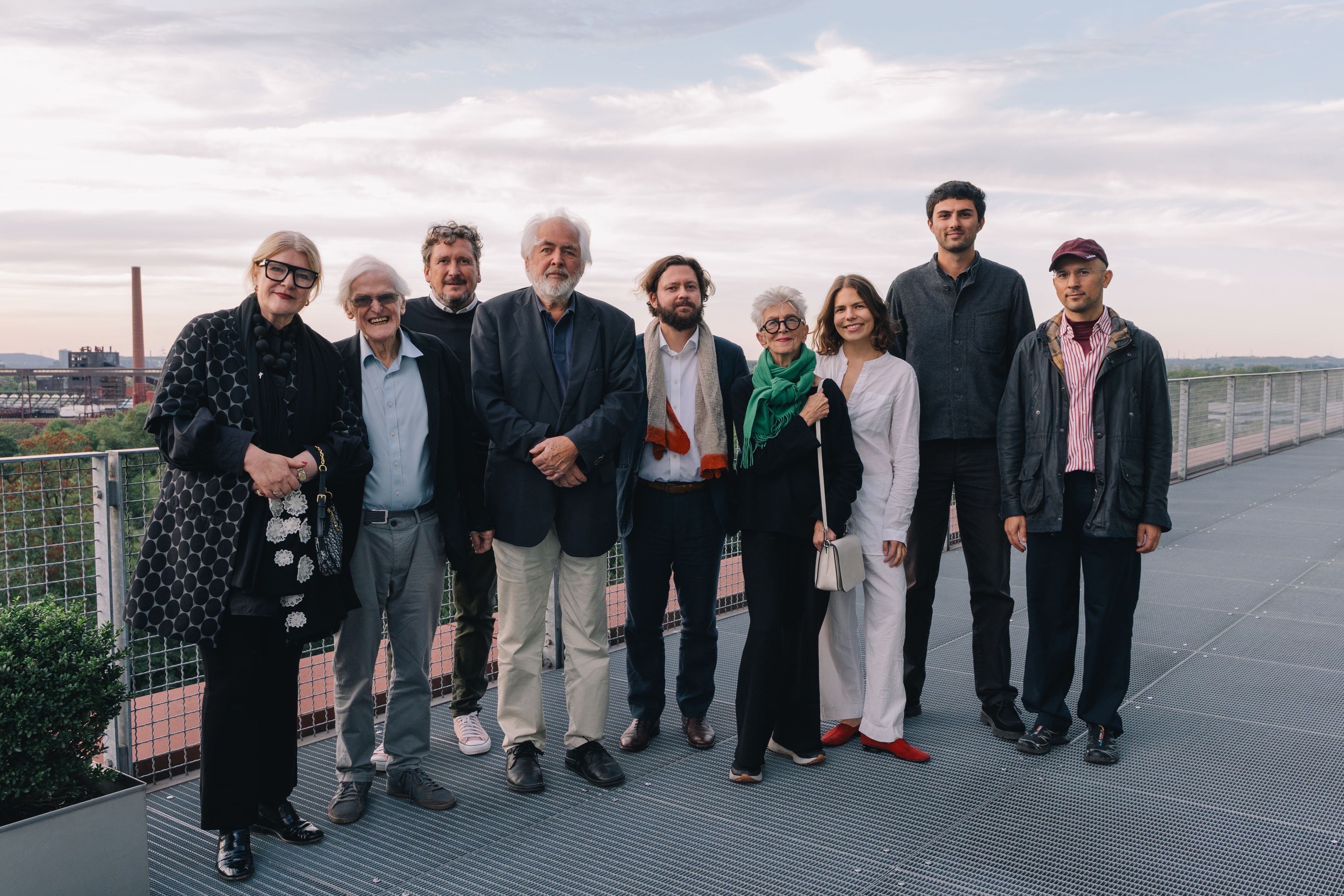
An inter-disciplinary team of eight Creative Mediators was invited to develop alternative approaches and instruments for the transformation of these venues, resulting in the artistic programme of Manifesta 16 Ruhr. The Artistic Team is composed of eight Creative Mediators: Josep Bohigas, Gürsoy Doğtaş and three intergenerational tandems — Michael Kurtz & Henry Meyric Hughes, René Block & Leonie Herweg, and Krzystof Kosciuczuk & Anda Rottenberg.
If you would like to gain a deeper understanding of the ideas and context that shaped Manifesta 16 Ruhr, we invite you to explore the Conceptual Framework by Hedwig Fijen and the Conceptual Essay by Michael Kurtz below.
Manifesta 16 Ruhr Conceptual Framework
Written by Manifesta Founding Director Hedwig Fijen
For thirty years, Manifesta has travelled across Europe – from Rotterdam to Ljubljana, from Palermo to Marseille, from Prishtina to Barcelona. Always on the move, always listening, always asking what role culture can play in moments of transition. And perhaps there has never been a moment when that question felt more urgent than it does now.
Because everywhere we look, we see societies under pressure. We see growing inequality, political polarisation and the erosion of trust in institutions. We see the consequences of war on the European continent and disinformation shaping public debate. We see a generation growing up in a world that is more connected digitally than ever before, yet often more disconnected socially.
At the same time, something else is happening. Across Europe, people are searching for new forms of belonging – for places to meet, to listen, to disagree without division – and where collective life can still be imagined.
People are searching for rituals again. Not necessarily religious rituals, but rituals of gathering, of care, of participation, of community. And perhaps this is where the story of Manifesta 16 Ruhr begins. Because when the Ruhr Area invited us to develop this edition, we did not begin with an exhibition theme. We began with a simple question. What happens when the places that once brought communities together begin to disappear?
Across Germany, more than 20,000 churches are expected to become vacant or deconsecrated in the coming years. Many of them stand in neighbourhoods that were built during the great industrial expansion of the 20th century – neighbourhoods that once revolved around work, faith, solidarity and shared public life. Many of those structures have since changed: the industries, the demographics, the rhythms of everyday life. And yet the buildings remain, standing at the centre of neighbourhoods, waiting for a new purpose, waiting for a new story.
For Manifesta 16, these churches became more than buildings. They became a lens through which to examine a larger question. How can existing infrastructure be transformed to support new forms of collective life? How can culture contribute to rebuilding social cohesion? And how can public space once again become a place of encounter rather than separation?
Full Conceptual Framework by Hedwig Fijen
- ↗
This is not a church
Written by Michael Kurtz on behalf of the Manifesta 16 Ruhr Creative Mediators
Over a thousand churches were erected across the Ruhr Area after World War Two, replacing those destroyed by Allied bombs as well as serving new migrant communities. Some mid-century churches represented an attempt to articulate the ideals of post-fascist society. Architects rejected monumentalism and lowered the altar, prizing democracy over divine authority.
These radical buildings are still unavoidably haunted by history. Liebfrauenkirche in Duisburg, for example, contains statues from a war-destroyed predecessor. And the walls of Gethsemane-Kirche in Bochum, are made from Trümmerziegel or ‘rubble bricks’ salvaged by local people in the 1940s. Rubble was the most widely available material in mid-century Germany. Millions of cubic metres were cleared in the Ruhr Area alone, partly by the famous Trümmerfrauen or ‘rubble women’. Bricks that could not be re-used were often crushed into aggregate for concrete, so even the ultimate material of the post-war future was composed from the fabric of Europe’s violent past.
After decades of secularisation, churches in the Ruhr Area are now closing on a weekly basis, often then purchased by profit-hungry developers or left slowly to decay. These landmarks, once central to neighbourhood life for many, have become symbols of our diminished public realm: of social atomisation and the loss of collective experience. Manifesta 16 Ruhr takes place in and around a selection of the churches and responds to their situation. It asks: what can we do with these buildings? What is their meaning? How might they be preserved as social spaces? Can they contribute to the formation of a more just society?
The artistic team’s approach to these questions is encapsulated in the image of the rubble bricks: fragments of an old world that were used to build anew. In the resourceful spirit of the Trümmerfrauen, artists reconfigure discarded material – superfluous benches, smashed windows, silent organ pipes – to articulate new ideas. Like the walls of Gethsemane-Kirche, our visions for the future of collective experience are built from remnants of the past. Our hopes for transformation are tempered by the need to remember, actions motivated by a duty to address historic injustices. This dual temporality, looking back and forward at once, structures the biennial.
On the one hand, the churches are turned into sites for sharing stories of the past, together presenting a kaleidoscopic history of the Ruhr Area and its people. On the other hand, participatory projects and architectural interventions redefine the buildings. Historical narratives rub up against contemporary life at every turn. This is the overarching argument of Manifesta 16 Ruhr. Social progress is dependent on active engagement with the past, on an understanding of how history has shaped the present. The creation of new public spaces and the preservation of historical consciousness are two sides of the same coin.
The artistic team’s Trümmerziegel approach is expressed by the tongue-in-cheek title, ‘This is not a church’, which dwells in negativity just as it signals potential for change. If this is not a church, the phrase begs the question, what is it? Loss is entwined with possibility, the presence of the past with the prospect of a different future.
This is a condensed version of the conceptual essay, written by Michael Kurtz on behalf of the Manifesta 16 Ruhr Creative Mediators
Programme with filter:
Artistic Programme
- Opening Night of Manifesta 16 Ruhr at UNESCO World Heritage ZollvereinArtistic ProgrammeMusicOpeningSocial
- Create something new out of old church pews! Building workshop in Gelsenkirchen with Spanish designer Curro Claret and ...Get Involved!WorkshopCrafts
- Create something new out of old church pews! Building workshop in Gelsenkirchen with Spanish designer Curro Claret and ...Get Involved!WorkshopCrafts
- Create something new out of old church pews! Building workshop in Gelsenkirchen with Spanish designer Curro Claret and ...Get Involved!WorkshopCrafts
- Create something new out of old church pews! Building workshop in Gelsenkirchen with Spanish designer Curro Claret and ...Get Involved!WorkshopCrafts
- Create something new out of old church pews! Building workshop in Gelsenkirchen with Spanish designer Curro Claret and ...Get Involved!WorkshopCrafts
- Create something new out of old church pews! Building workshop in Gelsenkirchen with Spanish designer Curro Claret and ...Get Involved!WorkshopCrafts
- Your Voice Counts! Katılım Çağrısı // دعوة للمشاركة // Take PartGet Involved!Artistic ProgrammeOnlineAll ages
- Kunstmuseum Bochum x Manifesta 16 Ruhr: Anda Rottenberg and Noor Mertens in conversationTalk
- Lecture by our Creative Mediator Dr. Gürsoy Doğtaş at the Museum Ludwig in CologneWarm-Up Programme
- “Gurbet Archive: What the Thread Carries” – A conversation with Fatma Ceylan and Bengü Kocatürk-Schuster (Herkesin Meydanı)Artistic ProgrammeTalkAll agesSocial
- Mira M.Yang - Performance "Karaoke Falsetto"Artistic ProgrammePerformanceMusic
- "This is not a church“ - Kulturkonferenz Ruhr mittendrin X Manifesta 16 Ruhr X KunstforumArtistic ProgrammeConference
- Gurbet Archive - Workshop "The Mother’s Bread" with Ayşe GüleçArtistic ProgrammeFood & DrinkWorkshopSocialAll ages
- Begzada Alatović + Bureau Baubotanik Collective - "Tea Garden Gathering"Artistic ProgrammeGardening
- Havîn Al-Sîndy - Performance "How to Carry a Locust"Education & Mediatio...Artistic ProgrammeSchool, Neighborhood...For kidsPerformanceAll agesOpening
- Begzada Alatović + Bureau Baubotanik Collective - "Tea Garden Gathering"Artistic ProgrammeGardening
- Collective Sounds - Workshop with Real Church BellsGet Involved!WorkshopMusic
- Public Workshop: "Church Buildings as Cultural Heritage and a Resource for the Future"Warm-Up ProgrammeWorkshop
- Collective Sounds - Workshop with Real Church BellsGet Involved!WorkshopMusic
- Collective Sounds - Workshop with Real Church BellsGet Involved!WorkshopMusic
- Collective Sounds - Workshop with Real Church BellsGet Involved!WorkshopMusic
- Opening of Community Art Project "Arca" by PELE CollectiveArtistic ProgrammeGet Involved!OpeningSocial
- Renate Janßen + Begzada Alatović + Bureau Baubotanik - "Opening Tea"Artistic ProgrammeSocialGardening
- Weberei Kai - Workshop "Time for Baby Blankets"Artistic ProgrammeFor FamiliesWorkshopCrafts
- Begzada Alatović + Bureau Baubotanik Collective - "Tea Garden Gathering"Artistic ProgrammeGardening
- Tea Garden Activation: Herbal Salt & Herbal Oil Workshop Facilitated by Begzada AlatovićArtistic ProgrammeWorkshopGardening